
Mark Minervinis Volatility Contraction Pattern (VCP) is one of the most popular trading setups used by professional investors worldwide. In simple terms, VCP helps identify stocks that are consolidating before a strong breakout. By mastering this pattern, traders can find opportunities to enter early in high-potential stocks while keeping risk under control. In this post, we’ll break down what the VCP is, why it works, and how Indian traders can apply it to Nifty 50, midcap, and growth stocks.
1. What is Mark Minervini’s Volatility Contraction Pattern (VCP)?
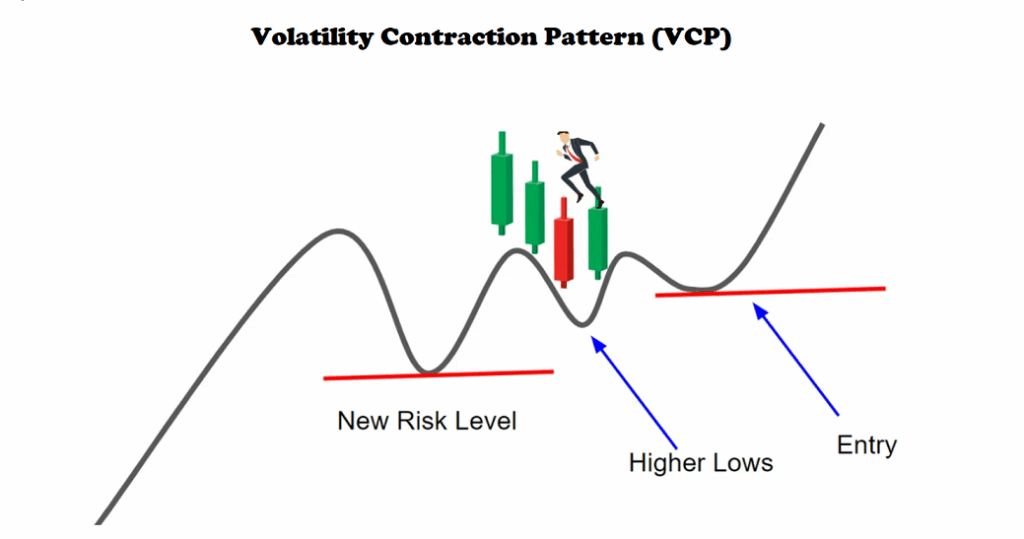
The VCP is a chart pattern where a stock shows multiple pullbacks or contractions, each smaller than the previous one. This signals that sellers are gradually getting exhausted while buyers are quietly absorbing supply. When price finally breaks above resistance with volume, it often leads to a sharp upside move.
2. Why the Mark Minervinis Volatility Contraction Pattern Works in the Indian Market
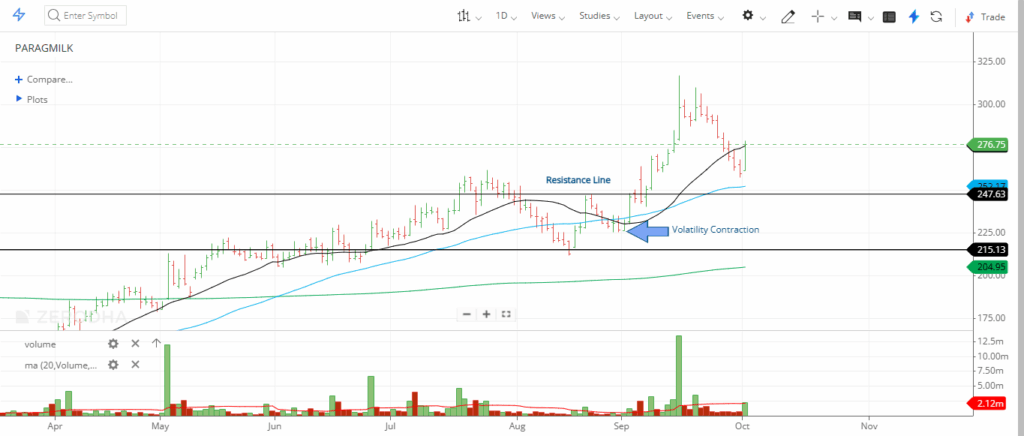
The Indian stock market is dominated by retail participation and strong sectoral themes. Stocks often move in long trends once accumulation starts. VCP fits perfectly here because it identifies those exact points where institutional buyers are building positions silently. Traders who understand the psychology behind this pattern can capture multi-week or even multi-month rallies.
For example, many recent multibagger stocks in India showed VCP-like formations before their big runs.
3. Risk Management: The Core of Mark Minervinis Volatility Contraction Pattern
Mark Minervini emphasizes that finding the setup is only half the battle — protecting capital is the other half. In VCP trading, risk management means placing stop-loss orders just below the last contraction or pivot point. This way, even if the trade fails, the loss remains small.
A typical risk per trade should not exceed 1–2% of your total capital. This simple rule ensures that a series of small losses won’t wipe you out before you catch the big winner.
4. How to Identify Mark Minervinis Volatility Contraction Pattern in Indian Stocks
When scanning Indian stocks for VCP setups, look for the following signs:
- Multiple contractions – usually 3 to 4, each smaller than the last.
- Tight trading ranges – volatility dries up as the base matures.
- Volume decline – selling pressure reduces.
- Pivot point – a clear resistance line where price attempts to break out.
- Volume expansion on breakout – confirmation that demand has taken over.
Tools like TradingView or Chartink can help visualize these setups in Indian equities.
5. Applying Mark Minervinis Volatility Contraction Pattern to Build Trading Confidence
The biggest advantage of Mark Minervini’s Volatility Contraction Pattern (VCP) is that it removes guesswork. Instead of chasing random stocks, you follow a repeatable process. Combined with proper risk management, VCP gives traders confidence to scale positions in high-probability setups.
External resources like Mark Minervini’s official site and Investopedia’s guide on trading patterns can provide deeper learning for those who want to master this strategy.
Final Thoughts
Mark Minervini’s Volatility Contraction Pattern (VCP) explained with Indian stocks offers a practical roadmap for traders who want consistency. While no setup is perfect, VCP blends technical analysis with trader psychology, making it highly effective in volatile markets like India.
The key is patience — waiting for the right setup, confirming with volume, and respecting your stop losses. If practiced with discipline, VCP can help you ride some of the most profitable moves in the Indian market.
📌 Next Step: Start scanning your favorite Indian stocks for VCP setups. Focus on midcaps and growth stocks where institutional participation is high. And remember: trading success is not about predicting, but about managing risk and following proven patterns.
The Art of Risk Management: 5 eye opening lessons from Mark Minervini
Really insightful post!