
In the world of technology, few companies have demonstrated the kind of relentless innovation and wealth creation that NVIDIA Corporation has delivered. What started as a humble graphics company in the 1990s is now the undisputed king of AI infrastructure — and a stock market phenomenon that turned early believers into multi-millionaires.
Let’s take a closer look at NVIDIA’s incredible journey, its co-founders’ bold vision, the early roadblocks it faced, and how its relentless evolution rewarded employees and investors alike.
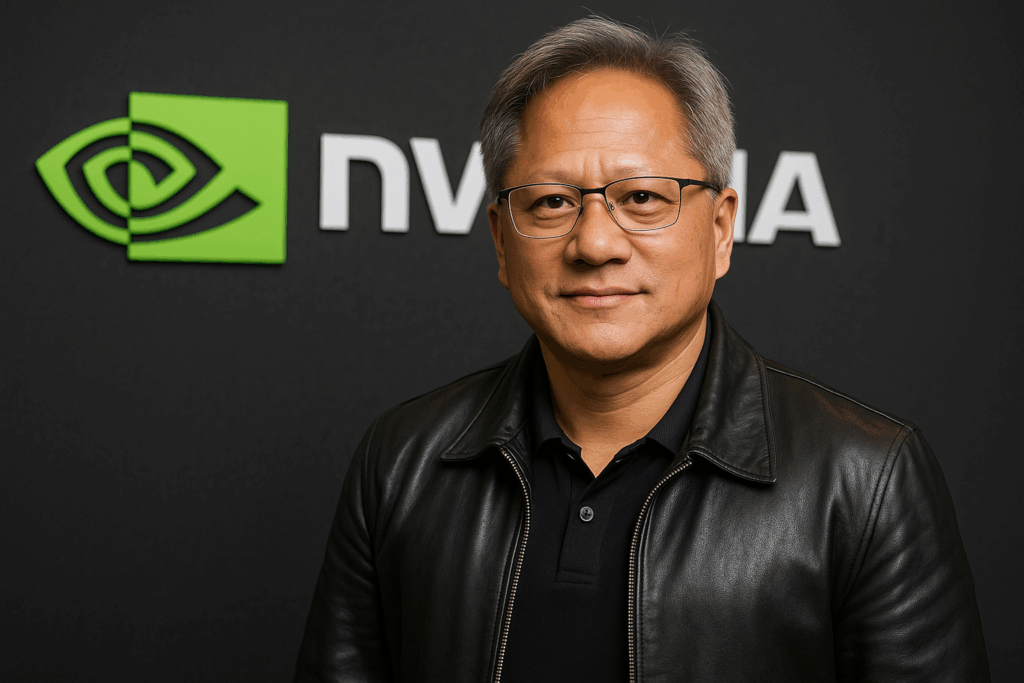
🏁 The Origins: A Startup with a Vision
NVIDIA was founded in 1993 in Santa Clara, California, by three ambitious technologists:
- Jensen Huang – A Taiwanese-American electrical engineer and the current CEO
- Chris Malachowsky – A microprocessor designer
- Curtis Priem – A former senior staff engineer at Sun Microsystems
Their belief was simple but bold: graphics and parallel processing would define the future of computing. At a time when PCs were just gaining mainstream popularity, this was a visionary bet.
🚧 Early Challenges: A Tough Road Ahead
In the 90s, the graphics market was crowded with dozens of players — 3dfx, S3, ATI, and more. NVIDIA’s first chips weren’t blockbusters, and the company struggled for mindshare and performance parity.
But their breakthrough came in 1999 with the launch of the GeForce 256, dubbed the “world’s first GPU” — bringing real-time 3D rendering and transformation capabilities to personal computers.
From there, NVIDIA never looked back.
📈 The Stock Story: Patience That Paid Off
NVIDIA went public in 1999 at a split-adjusted price of around $0.40–$0.50 per share.
Here’s a rough timeline of how the stock performed:
| Year | Approx. Stock Price | Key Events |
|---|---|---|
| 2005 | ~$2–$3 | Gaming & graphics start to go mainstream |
| 2010 | ~$5–$10 | CUDA & GPGPU gaining momentum |
| 2015 | ~$20 | Early AI & self-driving bets begin |
| 2020 | ~$60–$70 | AI hype rises, gaming booms in lockdown |
| 2024–25 | $1200+ | Dominates AI chips (esp. data centers + LLM training) |
✅ From under $1 in early 2000s to over $1200 in 2024, NVIDIA has delivered over 1,00,000% returns in just two decades — a compound annual growth rate (CAGR) of >40%.
👩💻 How Employees Benefited
NVIDIA’s wealth wasn’t just limited to shareholders. As a company, NVIDIA has always:
- Generously distributed stock options and RSUs to employees
- Built a strong culture of innovation + autonomy
- Focused on long-term performance over short-term wins
Many early engineers and product managers who joined the company in the 2000s saw their equity stakes balloon into millions of dollars.
Even today, NVIDIA is one of the most employee-rewarding companies in Silicon Valley, with generous ESOPs, internal mobility, and a culture rooted in “do what’s best for the company” ethos.
🧠 The Big Pivot: Why NVIDIA Won the AI Race
NVIDIA’s true genius lay in its vision beyond gaming:
- CUDA platform (2006) made it easier for developers to run non-gaming workloads on GPUs
- Early bets in AI, data centers, and automotive gave them a head start
- Today, NVIDIA powers almost every major LLM training cluster, including OpenAI, Google, Meta, and Amazon
Its moat isn’t just hardware — it’s an entire software ecosystem around AI development.
Are There Indian “NVIDIAs” in the Making?
While India doesn’t yet have an AI semiconductor giant of NVIDIA’s scale, there are a few promising companies that could follow a similar multi-decade wealth creation path, albeit in different sectors:
1. Tata Elxsi
- Works on embedded systems, automotive AI, and design solutions
- Strong exposure to EVs, autonomous driving, and smart devices
- Has scaled rapidly in the last 5 years with R&D-led growth
📈 From ₹200 in 2015 to over ₹9000 in 2024 – it’s one of India’s quiet compounders.
2. Syrma SGS
- Focused on electronics manufacturing, IoT, sensors, and industrial applications
- Benefiting from India’s PLI (Production Linked Incentive) schemes
- Potential long-term play on India becoming a global electronics hub
💡 The takeaway: Look for companies with:
- High R&D investment
- Scalable, global products
- A focus on tech infrastructure, not just consumer-facing applications
🏁 Conclusion: What NVIDIA Teaches Indian Investors
NVIDIA’s story isn’t just about tech — it’s about vision, adaptability, and compounding. For Indian investors, the lesson is simple:
✅ Back visionary companies early
✅ Hold through volatility
✅ Think in decades, not quarters
And who knows — the next NVIDIA may just be quietly building in Bengaluru or Pune.
Disclaimer: The information provided in this article is for educational and informational purposes only. The mention of Tata Elxsi and Syrma SGS is not a recommendation to buy or sell any securities. Please do your own research or consult a registered financial advisor before making any investment decisions.
📌 Want more stories like this or analysis of hidden Indian compounders? Subscribe to our newsletter and never miss a deep dive.